- Apr 1
Stop Building for Who You Used to Be
- Leigh Wilson
- coaching
There’s a quiet problem that shows up in a lot of successful businesses.
And it usually doesn’t look like failure.
It looks like growth…
with just a little more friction than there should be.
The business is working.
Revenue is coming in.
From the outside, everything looks solid.
But behind the scenes?
Things feel heavier.
Decisions take longer.
Progress feels slower.
And the work doesn’t feel as energizing as it used to.
Most people assume this is a motivation problem.
It’s not.
It’s usually something much simpler.
You’re still building your business for a version of you that no longer exists.
Success Changes You (Whether You Notice It or Not)
When you first build a business, everything is about momentum.
You say yes to opportunities.
You figure things out on the fly.
You wear every hat because you have to.
And that works.
In fact, it’s often exactly what’s required to get something off the ground.
But over time, things change.
Your experience grows.
Your priorities shift.
Your capacity evolves.
The problem?
Most people never update the business to match.
So now you have a more experienced, more capable version of yourself…
operating inside systems that were built when you had less of everything.
Less time.
Less clarity.
Less structure.
And that mismatch creates friction.
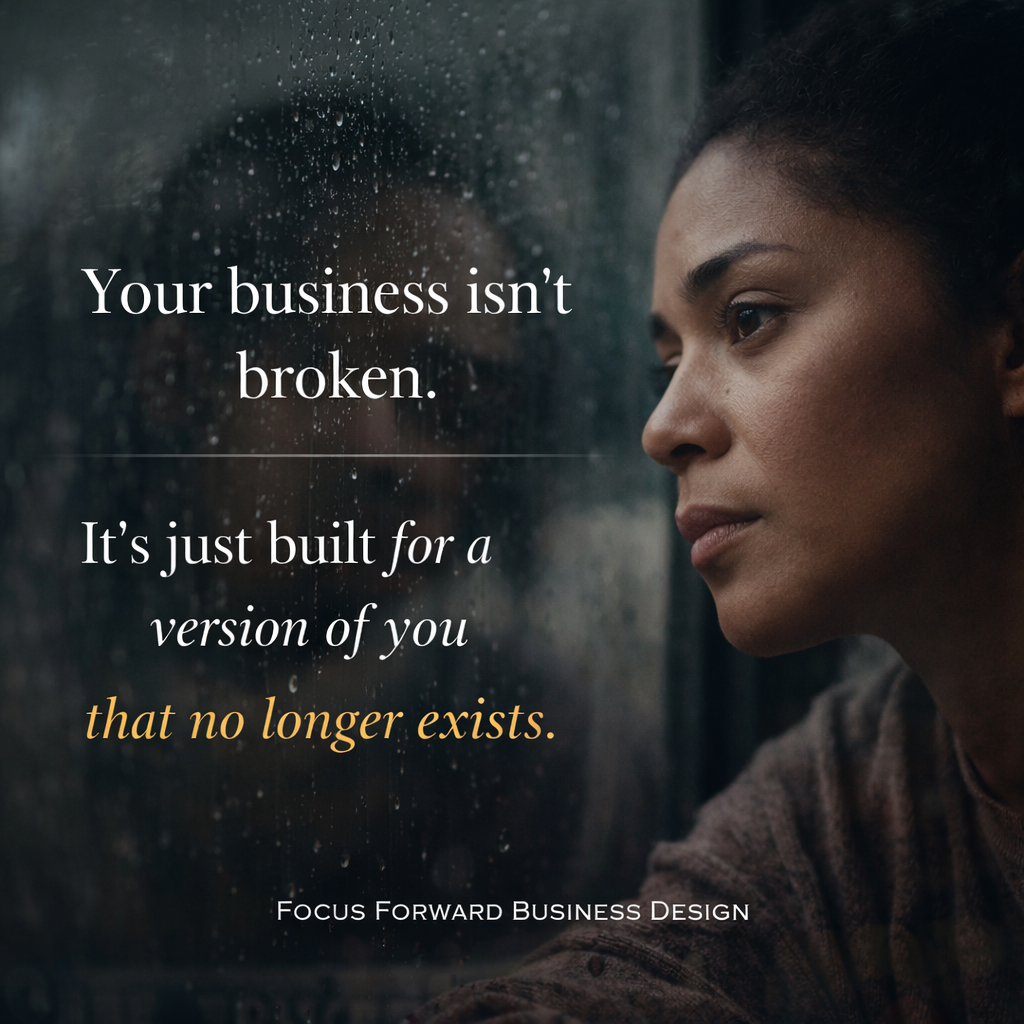
The Identity Trap
Here’s where it gets interesting.
The hardest part of growth isn’t strategy.
It’s identity.
Because the person who built the business usually had a very specific role:
The one who solves everything.
The one who makes every decision.
The one who keeps everything moving.
There’s pride in that.
But over time, that identity becomes a limitation.
What once made the business successful…
starts slowing it down.
And letting go of that role?
That’s the uncomfortable part.
Nostalgia Is Not a Growth Strategy
We romanticize the early days.
The hustle.
The long hours.
The grind.
And while those things matter, they can quietly mislead us.
Because just because something worked in the past…
doesn’t mean it should define the future.
Growth doesn’t happen by repeating what worked.
It happens by redesigning what no longer does.
Signs You’ve Outgrown Your Own Systems
If your business feels heavier than it should, pay attention.
A few common signs:
You’re involved in decisions you shouldn’t need to touch
The business slows down when you step away
You’re busy all day but not moving forward
You’ve added complexity instead of clarity
Success feels more stressful than it used to
None of these mean something is broken.
They usually mean something is outdated.
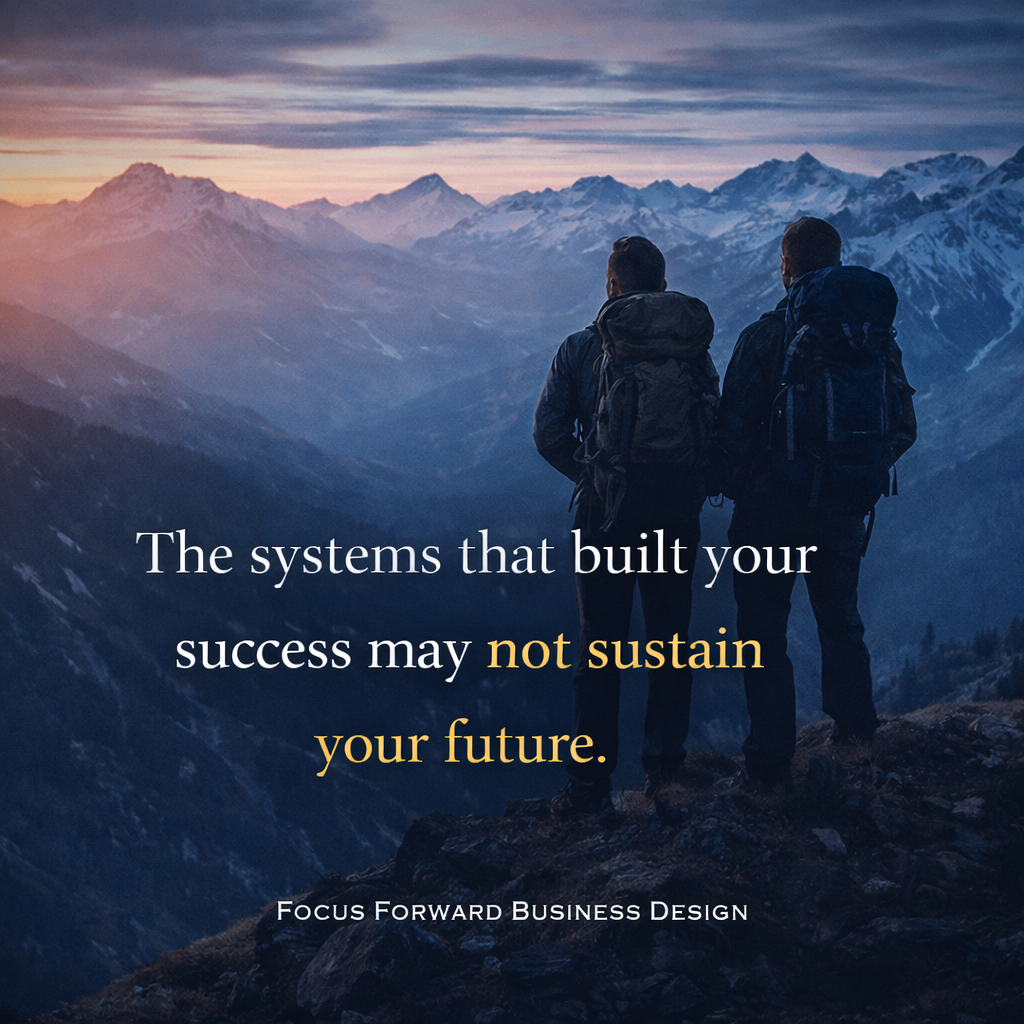
The Redesign Question Most People Avoid
Every so often, it’s worth asking a different kind of question.
Not just:
“What should I do next?”
But:
“Who am I building this for now?”
Because the version of you that started the business…
is not the same version running it today.
And the version required to grow it further…
may be different again.
What Real Growth Actually Looks Like
Growth isn’t always about adding more.
Sometimes it’s about letting go.
Letting go of:
Tasks that no longer require you
Roles that no longer serve you
Systems that no longer fit
And replacing them with something better aligned.
Better aligned with your time.
Your energy.
Your priorities.
Your life.
Because when those things line up, everything changes.
Decisions get clearer.
Momentum gets easier.
And the business starts to feel like it supports your life…
instead of consuming it.
Click Here or Scan the Code to Get Our Monthly Business Tips

Build for Who You Are Now
You don’t need to abandon what got you here.
That version of you did exactly what it needed to do.
But you also don’t need to stay there.
Honor the past.
But don’t build your future around it.
Because the most successful businesses aren’t built on hustle alone.
They’re built on alignment.
Alignment between who you are…
and what you’re building.
So if things feel heavier than they should…
it might not be time to push harder.
It might be time to redesign.
And start building for who you are now.
And who you’re becoming.